
- Home
- »
- Family Bonding Challenge
- »
- Creating a Family Rhythm:...
Creating a Family Rhythm: 4 Simple Steps for a More Peaceful Year
Age: 4+
Time: at least 15 minutes
Materials: free Family Rhythm download and something to write with
Focus: family communication and teamwork
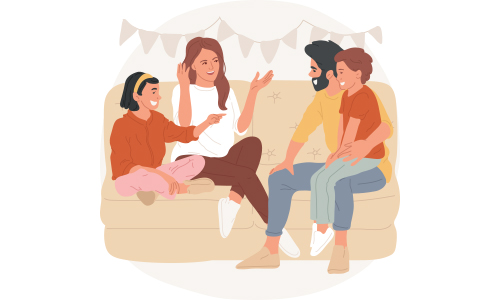
The New Year is a great time to reflect on what’s working for your family and what isn’t, making it the perfect time to create a family rhythm that feels supportive rather than stressful. This approach isn’t about tightening your schedule or aiming for perfection, but about finding a flow that fits real life.
This Family Bonding Challenge is about helping your family intentionally design how you want your days to feel and crafting a family rhythm to make that happen. It’s a simple, connection-centered reset that reduces stress, strengthens emotional safety, and creates rhythms that support everyone in the family.
Free Resource Guide
Creating a Family Rhythm
A practical guide to building emotional safety and intentional connection through small, sustainable changes to your family’s daily flow.
Why Family Rhythms Matter More than Routines
Routines tell us what to do and when to do it. Rhythms, on the other hand, focus on flow. They allow for consistency without rigidity and structure without pressure.
Children thrive when their days feel emotionally predictable. Knowing that mornings are calm, evenings include connection, or weekends include togetherness gives kids a sense of safety, even when life feels busy. For parents, intentional rhythms reduce decision fatigue and help shift leadership from constant reacting to purposeful guiding.
When families align around how they want their days to feel, stress decreases and connection increases naturally.
How Can You Create a Family Rhythm That Works for Your Family?
There are four easy steps to figuring out the right rhythm for your family.
-
Name the Stress Points.
Begin by getting curious. During your next family meeting, let your family know you want to understand what’s not working during everyone’s days, that you want to understand what feels hard.
Ask questions like:
- “What parts of our day feel rushed or stressful?”
- “When do we feel most disconnected from each other?”
- “What time of day feels hardest for you?”
Kids often name things adults overlook: loud mornings, rushed transitions, or not knowing what to expect next. Simply naming these stress points helps everyone feel seen and heard.
-
Identify What Helps Each Person Feel Better.
Next, find out what’s helpful.
Have each family member complete these sentences:
- “I feel calmer when…”
- “I feel connected when…”
- “I feel supported when…”
You might hear answers like quiet time, music, physical movement, one-on-one attention, predictable routines, or flexibility. Write everything down.
This step is powerful because it teaches kids emotional awareness and shows them that their needs matter within the family system.
-
Choose One Rhythm Shift.
Instead of trying to change everything, take a look at the stress points and what helps family members feel better and choose one small shift for each of the following:
Mornings:
Example: If mornings feel rushed with kids melting down and parents nagging until everyone is out the door stressed and kids feel better with predictability and parents feel better with quiet and fewer decisions, try playing the same calming music every morning, waking up 10 minutes earlier, or preparing backpacks and lunches the night before.Evenings:
Example: If everyone comes home tired and irritable, and the kids want attention while parents need a break, try having a 15-minute transition period where there are no questions, screens, or tasks but a snack and/or quiet activity or shared decompression.Weekends:
Example: If weekends feel chaotic or wasted and the family wants connection while the parents need rest, try a weekend anchor moment where there’s one non-negotiable family moment (like a family walk, game night, or Sunday morning pancakes) while everything else stays flexible.These rhythm shifts are not rules. They are anchors, moments that bring your family back together emotionally.
-
Create a Family Rhythm Agreement.
End by creating a short, flexible statement that reflects your intentions. This becomes a shared reference point for the year.
Examples:
- “In our family, we protect calm mornings and connected evenings.”
- “We value rest, togetherness, and flexibility.”
- “We slow down enough to notice each other.”
Post this agreement somewhere visible. But remember, it’s not a contract, it’s a reminder.
Why a Family Rhythm Works
A Family Rhythm works because it does the following:
- Reduces stress without adding tasks
- Builds emotional safety and predictability
- Encourages communication and empathy
- Helps parents lead with intention rather than reaction
Most importantly, it creates a foundation of connection that supports everything else your family does throughout the year.

Carolyn Savage
Carolyn is a writer, proofreader, and editor. She has a background in wildlife management but pivoted to writing and editing when she became a mother.
In her "free time" she is a 4th Dan (degree) Kukkiwon certified black belt in Taekwondo, loves learning to craft from her enormously talented children, and then teaching what she's learned to her enormously talented grandmother. Read full bio >>
Get your free Family Bonding Challenge Calendar sent directly to your inbox!